by Peter Britton | Apr 24, 2025 | Ancient World, Military history, Uncategorised, World War I
All battles are awful affairs, but ancient battles must have had a awfulness all their own. Up close and personal A few years ago I went on a tour around some First World War battlefields. The tour guide talked about what it was like for ordinary soldiers to attack... by Peter Britton | Apr 17, 2025 | American history, Ancient World, Central America, Civilization, Farming, Population, Pre-Columbian civilizations, Religion, South America, Uncategorised
As I indicated in my last blog post, it is a truism amongst historians of the ancient world that early civilizations first arose on large floodplains. Here, fertile soils, fed by large-scale irrigation and flood control systems, enabled densely concentrated...
by Peter Britton | Apr 9, 2025 | Ancient Mesopotamia, Ancient World, Bronze Age, Civilization, Economy, Farming, Maritime History, Middle East, Nomadism, Population, Society and Economy, Towns, Trade
The earliest civilizations (in the Eastern Hemisphere at least) all arose in river plains – the Euphrates and Tigris in Mesopotamia, the Nile in Egypt, the Indus in South Asia and the Yellow River and Yangtze in China. This is because large rivers flood these... by Peter Britton | Apr 1, 2025 | Medieval Europe, Military history
Sometimes, historians have to deal with topics which are way outside their natural field of knowledge. For me, one such topic is horse riding. The only time I have been on a horse’s back was when I was about seven years old. A man with a horse came one day to a park... by Peter Britton | Mar 25, 2025 | Military history, Roman empire, The History of Ancient Europe, Uncategorised
The Roman empire was comprised of more than two thousand cities and tribes. Why was it that, out of all of them, it was the city of Rome that came to rule the rest? One of the easiest answers to this question is that the Romans had the best army. But this begs the... by Peter Britton | Mar 17, 2025 | Chinese history, Economy, Trade, Uncategorised
In the early 15th century, China sent out a series of great sea-going expeditions, which sailed further and further from the shores of China. Each one consisted of a huge fleet of warships, merchant ships and supply vessels. The first one set out in 1405, sailing... by Peter Britton | Mar 3, 2025 | Ancient World, The History of Ancient Europe, Uncategorised, Western civilization
Have you ever wondered why democracy emerged in Ancient Greece but nowhere else in the Ancient World? I have done quite a bit of thinking about this issue over the years (I’m not sure what that says about me!) It was such a remarkable development – and...
by Peter Britton | Feb 3, 2025 | Islam, Mathematics, Medieval Europe, Middle East, Philosophy, Technology, Trade, Western civilization
Are you any good at arithmetic? Yes? Can you add LIII to XLVII? Or perhaps subtract XIV from CXX? Or try this: multiply VII x IX? The answers are: C CIV LXIII These sums are in Roman numerals. How long did it take you to work them out? Not so easy, eh? Thankfully, in...
by Peter Britton | Jan 17, 2025 | Chinese history, Economy, Society and Economy, Trade
So far as places go, Venice and China are in many ways – in most ways – complete opposites. Venice is a small city; China a vast country. Venice isn’t even a state in its own right; it belongs to Italy. China is one of the most powerful states in the...
by Peter Britton | Jan 6, 2025 | Chinese history, Maritime History, Technology
The compass is one of the most significant inventions in world history. To this day it remains a vital instrument of international navigation; without it global trade and travel would be almost impossible, even in these days of GPS and radar. The compass played an... by Peter Britton | Dec 22, 2024 | American history, Technology
The Pony Express formed one of the legendary episodes of the “Old West” of the United States. Foundation It was founded by three freight transportation entrepreneurs, William H. Russell, Alexander Majors, and William B. Waddell. These men owned and ran the Central...
by Peter Britton | Dec 16, 2024 | Chinese history, Government, Technology, Uncategorised
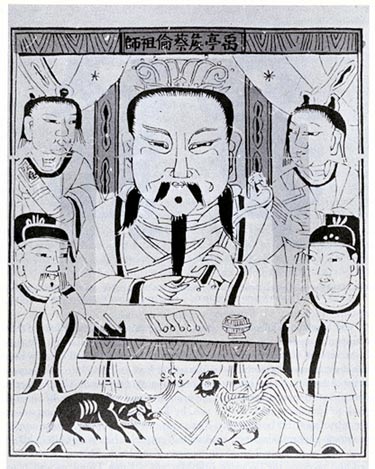
Have you heard of Cai Lun? No, I hadn’t either, until very recently. And yet, he had a huge influence on world history. It was he who refined the technology of paper-making to the point where it became easy to make a light, durable material on which writing was easy....
by Peter Britton | Dec 10, 2024 | Ancient World, Bible history, Christianity, Disease, Middle East
Didn’t Jesus and his disciples speak Hebrew, and therefore write in Hebrew? Well, not Jesus personally, nothing from him actually survives in writing, and there’s no actual evidence that he wrote anything down himself. And, come to think of it, probably not his...
by Peter Britton | Dec 2, 2024 | Chinese history, Civilization, Iron Age
Do any other historians think about the future, I wonder – and look to the past for clues as to what might unfold? I confess to doing that now and again. I definitely do NOT try to predict the future. As some wag said, “You can predict everything, except the...
by Peter Britton | Nov 27, 2024 | American history, Central America, Disease, Economy, Farming, Native Americans, Pre-Columbian civilizations
Along with the Aztec Empire and the Inca empire, Maya civilization is probably one of the three civilizations which most people have heard of from Pre-Columbian America. Of all of them, indeed, it was the Maya who are widely recognized as reaching the highest levels...
by Peter Britton | Nov 21, 2024 | Asia, Chinese history
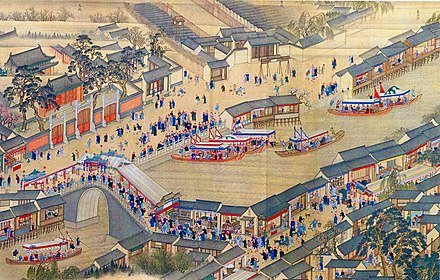
When we westerners look at Chinese history we often come to the conclusion that the last dynasty of China was a total failure. However, that is mostly because we focus a lot on that bit of Chinese history after the Europeans started to have a real impact. One of our...
by Peter Britton | Nov 1, 2024 | Chinese history
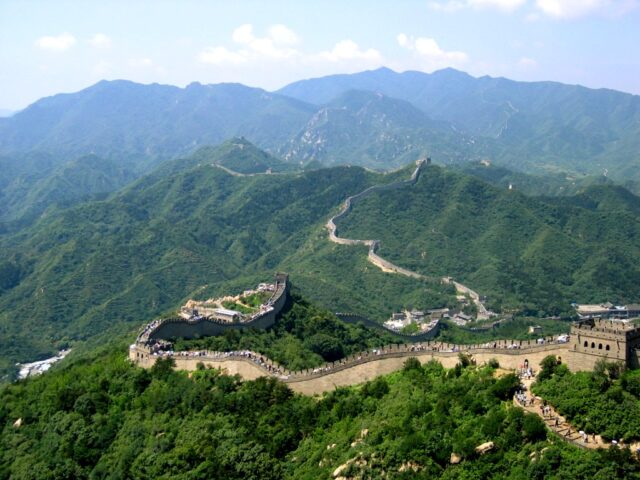
The largest structure ever built is (if you hadn’t already guessed it) the Great Wall of China. At 8,850 km (5,500 miles) long from east to west, or nearer 13,000 miles if all the various parallel defence system are take into account, nothing else comes close. And...
by Peter Britton | Oct 31, 2024 | Byzantine empire, Medieval Europe, Roman empire
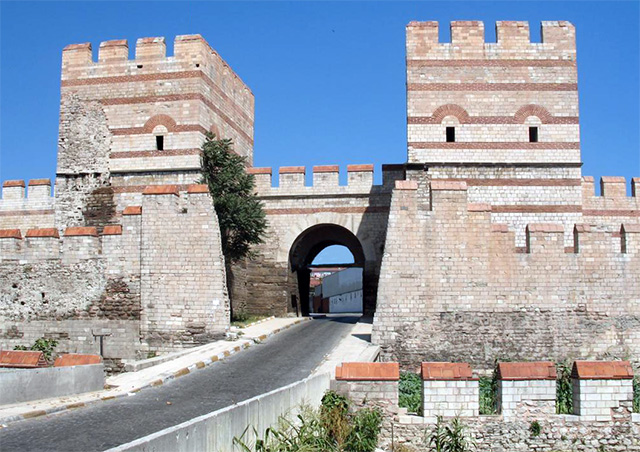
In 1453 the Christian city of Constantinople fell to the forces of the Ottoman sultan, Mehmet II. This event sent a shockwave throughout Europe. For hundreds of years, Constantinople had been the capital of what modern scholars call the “Byzantine Empire”. The...